
Reconstitution Steps
- This product is supplied as a liquid and does not require reconstitution.
- Confirm the product name, concentration or formulation, lot number, seal integrity and expiry before opening.
- Inspect the liquid against a light background; do not use material showing unexpected particles, discoloration, leakage or container damage.
- Label the opening date and use a sterile transfer device for every withdrawal; do not return withdrawn liquid to the vial.
- Store exactly as stated on the supplied label and discard at the labelled in-use limit or immediately if contamination is suspected.
Injection Technique
This product is a preparation liquid or diluent, not a standalone active-dose product. Do not apply an independent injection technique or dose to it.
- Confirm that the liquid is the exact diluent or preparation medium specified by the product-specific method.
- Clean the vial stopper with alcohol and allow it to dry completely before every withdrawal.
- Use a new sterile transfer syringe and needle for each entry into the vial.
- Withdraw only the validated preparation volume; do not administer the diluent as a standalone active product.
- Do not return withdrawn liquid to the vial and do not combine remnants from different lots.
- Record the lot number, opening date and transferred volume in the preparation record.
- Discard the used syringe immediately in an approved sharps container and discard the vial at its labelled in-use limit.
Supplies Needed
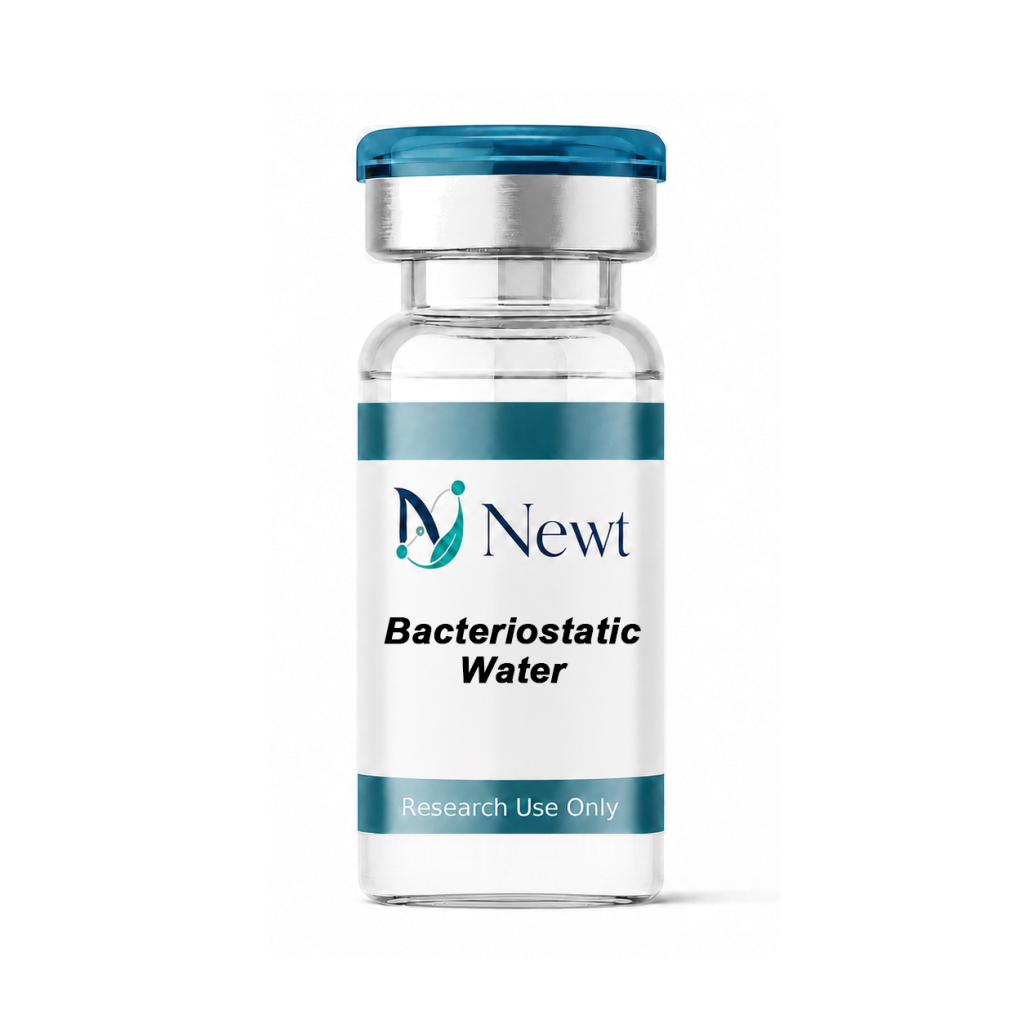
- Preparation-liquid vial (Bacteriostatic Water; use only for the preparation method stated on the product label).
- Sterile transfer syringe and needle sized for the validated preparation volume.
- Alcohol swabs—use a fresh swab on the vial stopper before every entry.
- Preparation record and approved sharps container for lot, opening-date and transferred-volume documentation and immediate device disposal.
Storage Instructions
This product is supplied as a preparation liquid. Follow its labelled storage and in-use limits rather than applying peptide-powder storage assumptions.
- Unopened: Keep the vial sealed and protected from light at the temperature stated on the supplied label until its labelled expiry.
- After opening: Record the opening date, refrigerate at 2–8 °C (35.6–46.4 °F) when required by the label and discard at the labelled in-use limit.
- Inspect the liquid and container before every transfer; discard it immediately if particles, discoloration, leakage, seal damage or suspected contamination is present.
- Do not freeze or combine remnants unless the supplied label explicitly permits it, and never return withdrawn liquid to the vial.
How This Works
Bacteriostatic Water is sterile water containing 0.9% benzyl alcohol as a preservative for repeated laboratory withdrawal. It is a preparation reagent, not an active peptide, and compatibility and allowable hold time depend on the material-specific method.
Chemical identity or a proposed mechanism does not establish an effective amount, treatment indication or safe human-use protocol.
Benefits & Side Effects
Benefits
- Multi-dose diluent role: Bacteriostatic water provides sterile water with benzyl alcohol preservative for compatible multi-dose preparations when the product label specifically permits it.
- Not an active treatment: It has no therapeutic benefit by itself and should only be used as a compatible diluent.
Side Effects & Evidence Limits
- Compatibility and contamination: An incompatible diluent, poor aseptic technique or use beyond the labelled period can compromise sterility or product stability.
- Benzyl alcohol warning: Benzyl alcohol can cause serious toxicity in neonates and may trigger sensitivity reactions; product-specific labeling takes precedence.
This material is provided for educational and laboratory reference only. It is not medical advice, a clinical protocol, or a recommendation for human or veterinary administration. Consult qualified professionals and applicable regulations before planning research.