
Dosage Schedule
| Cycle time | Amount per use | Frequency |
|---|---|---|
| Weeks 1–4 | 2,330 mcg | Once daily |
Reconstitution Steps
- Use a sterile syringe to draw the validated diluent volume specified by the selected vial-format table, product label or approved laboratory method.
- Inject the diluent slowly down the inside wall of the vial; avoid directing the stream onto the material and avoid foaming.
- Gently swirl or roll until fully dissolved. Do not shake.
- Label the vial with product, concentration, diluent, preparation date and operator; protect from light and refrigerate at 2–8 °C (35.6–46.4 °F) unless the product-specific method states otherwise.
- Use within the product-specific validated hold time and no later than 4 weeks after preparation unless published stability data supports a different period.
Injection Technique
Use this technique only when the product-specific approved label or authorized research protocol specifies subcutaneous administration and trained personnel are responsible for the procedure.
- Clean the vial stopper and the selected administration site with alcohol; allow both surfaces to dry completely.
- Pinch a small fold of skin and insert the needle into the subcutaneous tissue at a 45–90° angle.
- Do not aspirate during a subcutaneous injection; deliver the validated volume slowly and steadily.
- If the approved protocol specifies a volume greater than 1.0 mL, divide it between separate sites rather than using one site.
- Rotate sites systematically; commonly referenced subcutaneous sites include the abdomen, thigh and upper arm.
- Wait several seconds after delivery before withdrawing the needle to help ensure the complete validated volume is delivered.
- Discard the used syringe immediately in an approved sharps container; never recap or reuse it.
Supplies Needed
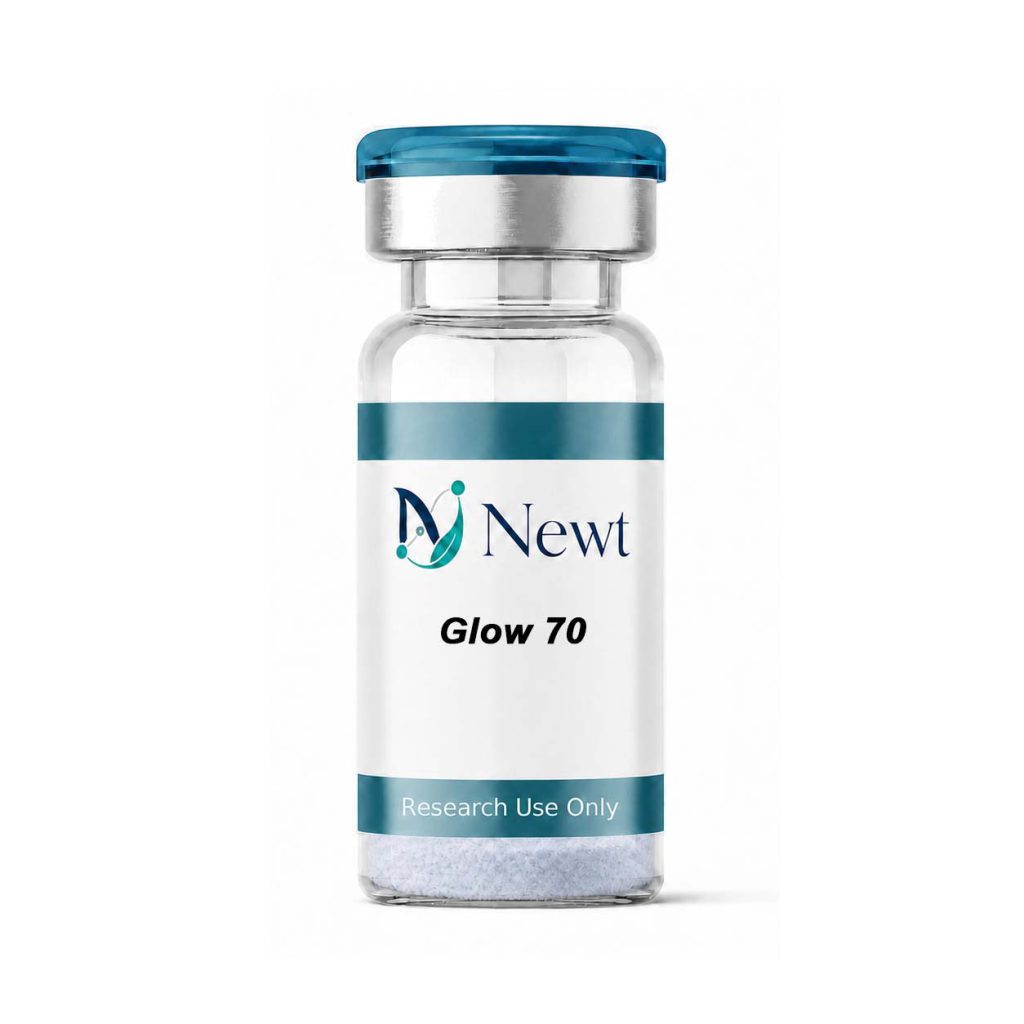
- Product vial (GLOW 70; use the selected labelled vial strength).
- U-100 insulin syringe (1 mL capacity) or the sterile administration device specified by the approved protocol.
- Validated diluent in the container size specified by the product label or authorized preparation method.
- Alcohol swabs and an approved sharps container—use a fresh swab for the vial stopper and each administration site.
Storage Instructions
Proper storage helps maintain product quality and stability. The supplied label, COA and product-specific validated method take precedence over these general handling rules.
- Unopened: Keep the vial sealed, dry and protected from light at the temperature stated on the supplied label; do not assume a universal shelf life.
- After preparation: Refrigerate at 2–8 °C (35.6–46.4 °F) unless the product-specific method states otherwise, and use only within its validated in-use period.
- Before opening a cold vial, allow the sealed container to equilibrate as required by the method so condensation does not enter the product.
- Long-term storage: Freeze or aliquot only when supported by product-specific stability data; avoid repeated freeze–thaw cycles and discard material with unexpected particles, discoloration or container damage.
How This Works
GLOW 70 is a three-component research blend containing GHK-Cu, BPC-157 and TB-500. The components are individually studied in copper-dependent extracellular-matrix signaling, nitric-oxide and growth-factor pathways, and actin-linked cell migration; the combined formulation has no established clinical protocol.
Chemical identity or a proposed mechanism does not establish an effective amount, treatment indication or safe human-use protocol.
Benefits & Side Effects
Benefits
- Component-based research: The blend combines compounds studied separately in skin, antioxidant and tissue-repair pathways.
- Evidence status: No controlled clinical study establishes a unique benefit, synergy or safety profile for the GLOW 70 formulation.
Side Effects & Evidence Limits
- Combination uncertainty: Adverse effects and interactions can reflect any component and cannot be inferred from single-ingredient studies.
- Formulation and route matter: Copper exposure, glutathione reactions and BPC-157 uncertainty require product-specific quality and safety review.
This material is provided for educational and laboratory reference only. It is not medical advice, a clinical protocol, or a recommendation for human or veterinary administration. Consult qualified professionals and applicable regulations before planning research.